
I’ve talked a lot about leadership development, emotional intelligence, self-awareness, and team performance, but rarely do we talk about people in the simplest possible terms:
Are you an asset to your team or a liability?
This is not about labeling people.
It is not about shaming or calling someone “bad.”
This is a concept, not a character judgment.
And like most concepts, it comes down to patterns — patterns of behavior that either move a team forward or pull it backward.
This idea is inspired by a classic framework many people first encountered in Rich Dad Poor Dad writted by Robert Kiyosaki:
- An asset adds value.
- A liability drains value.
Financially, it is straightforward.
But when you apply this lens to leadership and personal performance, things get interesting.
THE DIFFERENCE BETWEEN AN ASSET AND A LIABILITY IN THE WORKPLACE
An asset is someone who brings more value than they consume.
A liability is someone who takes more value than they contribute.
Value can look like:
- energy
- focus
- reliability
- accountability
- competence
- collaboration
- emotional stability
- initiative
- problem solving
- ownership
- self-management
In workplace terms:
- An asset stabilizes unsettling situations.
- A liability creates unwanted situations.
- An asset reduces workload on others.
- A liability increases workload on others.
- An asset requires low emotional maintenance.
- A liability drains the emotional energy of a team.
The good news is that people are not fixed in one category forever.
Everyone has liability tendencies at times.
The goal is awareness and growth.
THE VISUAL MODEL: ASSET VS LIABILITY
Liability:
See the picture below of a person wearing clown shoes. An arrow enters them, representing effort or responsibility, but they do not absorb it. It passes straight through and shoots into nothingness.
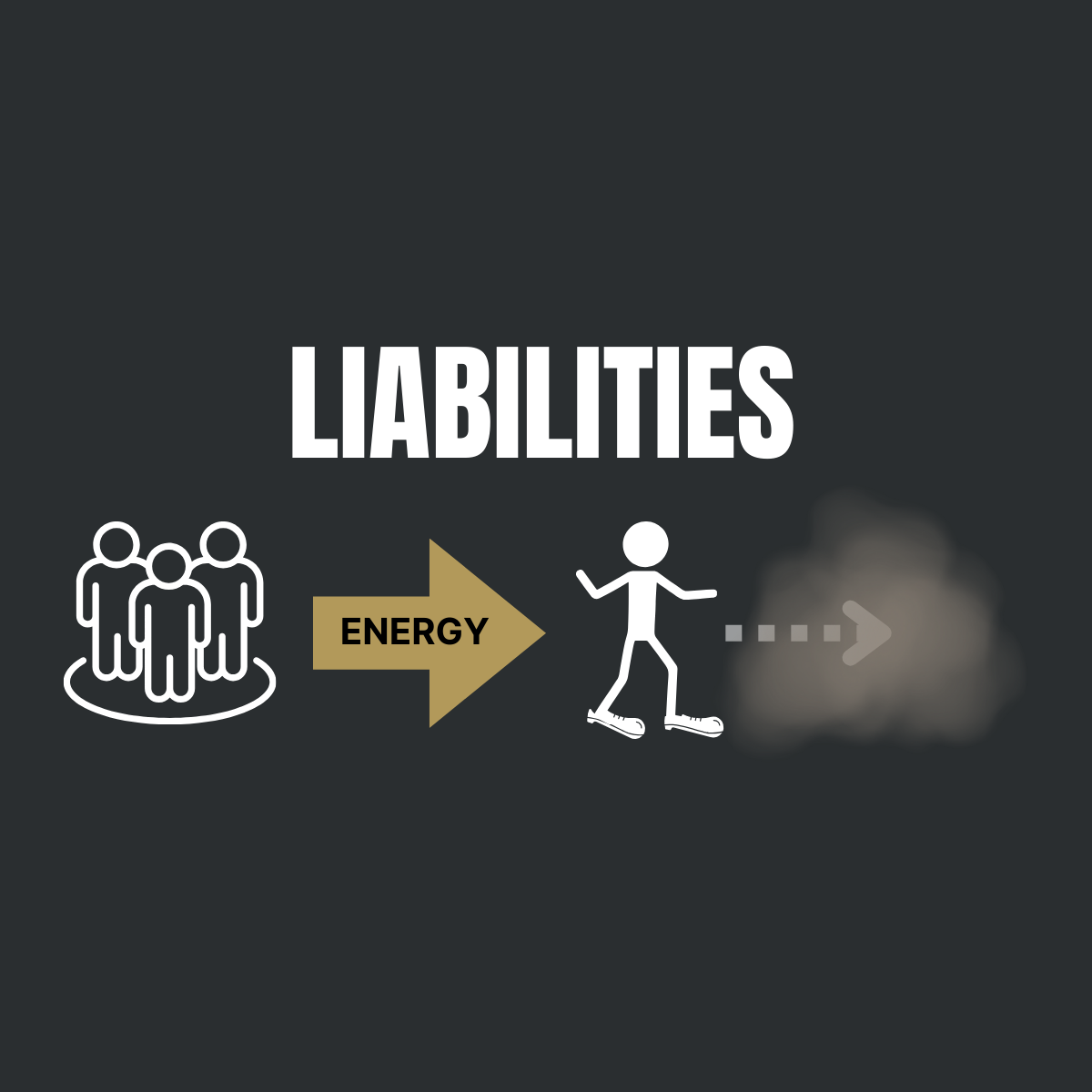
Simply put: The team gives energy → it goes through the person → it becomes nothing → the team deals with the fallout.
Liability behavior includes:
- avoiding responsibility
- doing the bare minimum
- adding more work to others
- creating drama
- resisting feedback
- neglecting self-growth
- inconsistency
Assets multiply energy.
Liabilities consume it.
Asset:
Now see the picture of someone who receives an arrow (representing effort or responsibility), stabilizes it, and converts it into multiple arrows that flow outward and back into the team.
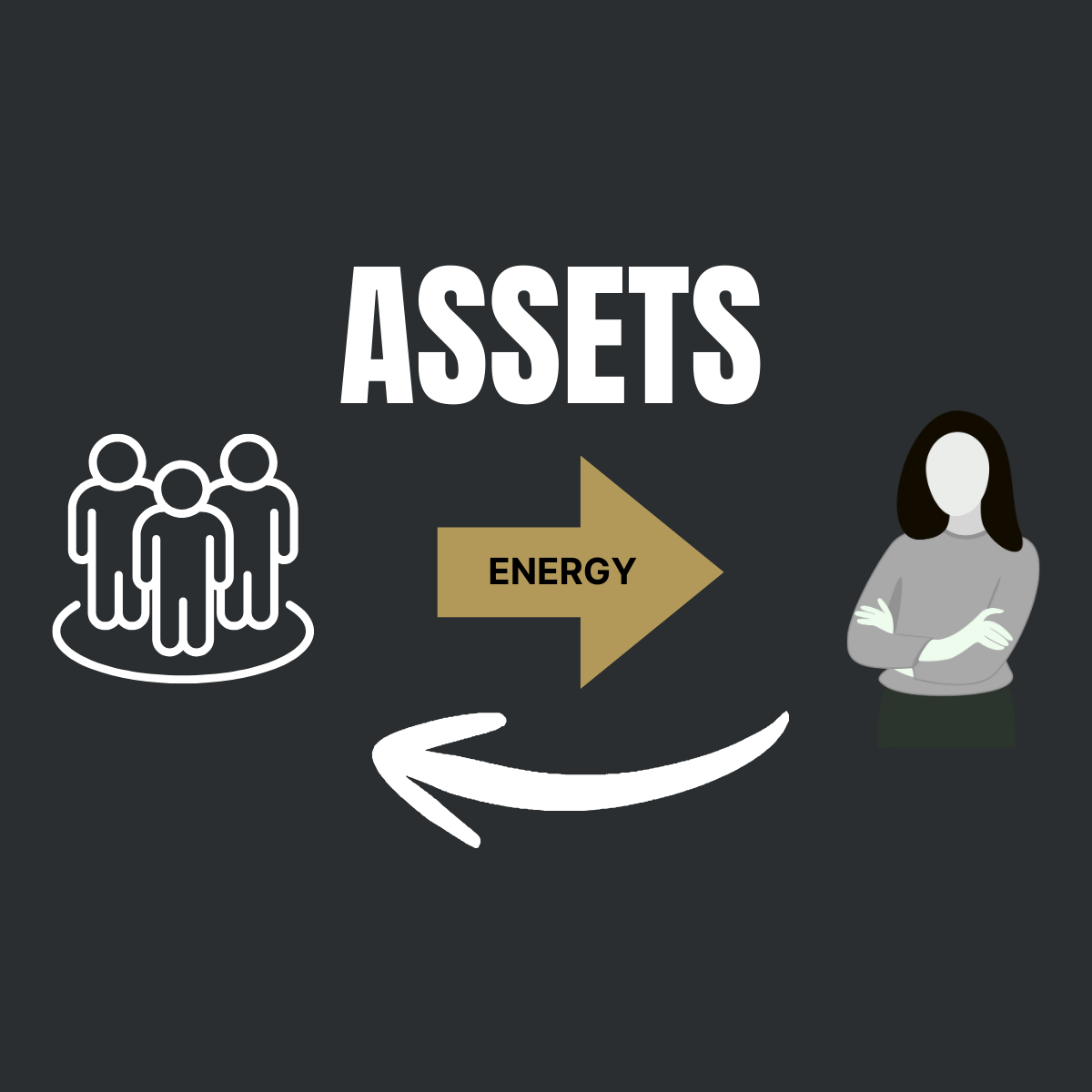
The team gives energy → the person processes it → they return more than they received.
Asset behavior includes:
- initiative
- reliability
- ownership
- proactive communication
- emotional steadiness
- problem solving
- supporting others
- continuous learning
Examples:
Performance
- An asset manages the workload of their boss.
- A liability adds more work.
Leadership
- An asset provides clarity and direction.
- A liability creates confusion.
Self-Leadership
- An asset invests in growth.
- A liability avoids development.
HOW TO MOVE FROM LIABILITY TO ASSET
1. Awareness
You cannot change what you cannot see.
2. Ownership
Liabilities avoid accountability.
Assets take responsibility.
3. Skill Development
Most liability behaviors come from missing skills: communication, regulation, time management, prioritization, initiative, and confidence.
4. Behavior Repetition
Consistency shifts perception.
5. Integration
Being an asset becomes identity, not effort.
FINAL THOUGHT
Being an asset or liability is not permanent.
It can be changed and it’s about the impact you bring.
You can always develop into an asset.
You can always choose behaviors that elevate your team, your leadership, and your outcomes.
That is the power of self-awareness and coaching.
You choose the direction.
Want to know more about our offerings? Give us a shout and fill out our contact form.
Author: Dr. Evan Lynn, Leadership Development Professional
